
Art as Humanity’s Enduring Language
Why Painting, Sculpture, and Digital Creation Continue to Define Who We Are.
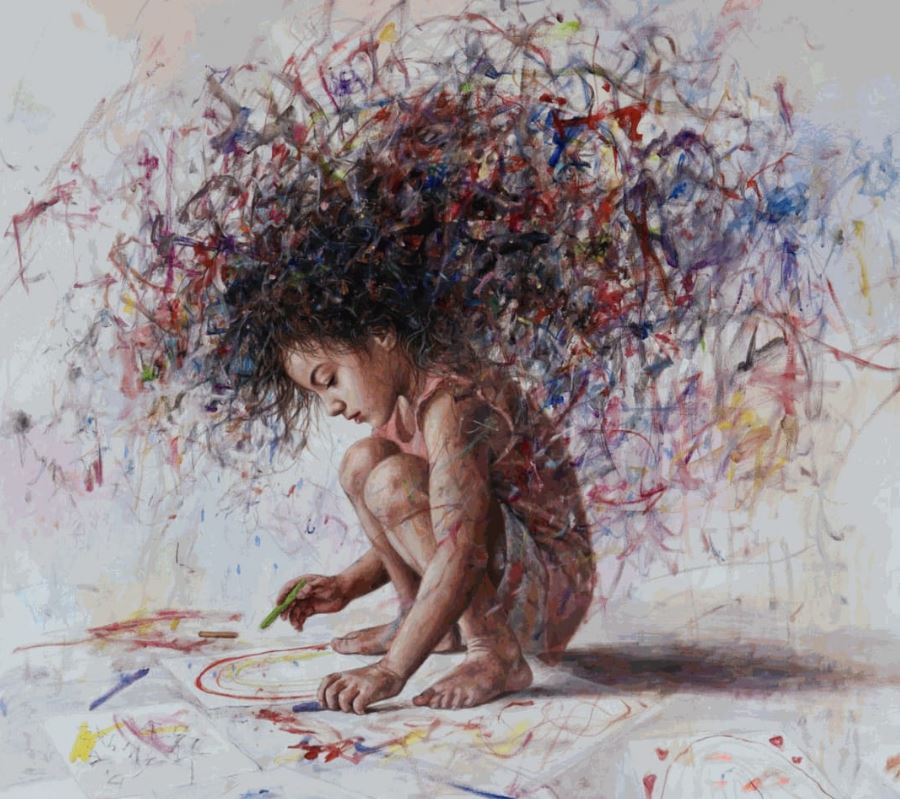
The Purpose of Art Beyond Aesthetics
Art has always been more than decoration. It is humanity’s first and most enduring language, a way of giving shape to memory, imagination, and meaning. When early humans pressed pigment onto cave walls, they were not only capturing the hunt but also affirming their presence and identity. Over centuries, painting, sculpture, and now digital art have expanded this impulse into forms that carry our deepest ideas into visible reality. Art records our history, reflects our struggles, and celebrates our triumphs. At its heart, art is not only about beauty but also about survival, continuity, and the drive to leave behind a trace of who we are.
Painting as Vision and Emotion
Painting embodies the power of translating thought and emotion into color, form, and rhythm. It has been a space where societies preserved their spiritual beliefs, explored scientific understanding of perspective and light, and redefined beauty across generations. From the grandeur of Renaissance frescoes to the intimate brushstrokes of Impressionism and the bold abstractions of modernism, painting demonstrates the evolving ways humans seek to understand both the world and themselves. It is a medium of endless versatility, equally capable of capturing realism with precision or dissolving reality into pure expression. Paintings endure because they are not only images but also invitations to feel and to see differently.
Sculpture as Presence and Encounter
Sculpture grounds art in the tangible. Unlike painting, which often creates illusions on a flat surface, sculpture demands physical presence. It inhabits the same space as the viewer, inviting interaction and engagement from every angle. Ancient sculptures celebrated gods and rulers, while modern and contemporary works often challenge norms with fragmented forms, unusual materials, or provocative concepts. The tactile nature of sculpture reminds us that art is not just something to observe but something to experience with the body as well as the eye. It brings form to abstraction, translating ideas into weight, texture, and scale.
Digital Art as Innovation and Expansion
In the digital age, creativity has moved into new frontiers. Digital art transforms pixels, algorithms, and interactive technology into fresh languages of expression. It exists on screens, in immersive environments, and through augmented or virtual realities that challenge traditional ideas of what art can be. Digital creation has democratized access, allowing artists from diverse backgrounds to share their work with global audiences instantly. It also redefines the role of the viewer, who can now become an active participant in interactive works. Digital art proves that while the tools of creation change, the artistic impulse remains constant: to explore, to innovate, and to connect.
Art as Reflection of Society
Every form of art carries within it the imprint of its time. Painting has mirrored revolutions in thought and science, sculpture has recorded ideals of power and identity, and digital art reflects the complexities of a networked, technological world. Art holds up a mirror to the societies that produce it, capturing anxieties, aspirations, and contradictions. It is a record of history not in dates and events but in color, form, and imagination. At the same time, art influences society, shaping how we see ourselves and what we believe is possible. It is both a reflection and an engine of change, ensuring that culture never stands still.
Art as Connection Across Time and Culture
One of art’s most profound roles is its ability to transcend boundaries. A sculpture from ancient Greece still moves viewers today, even though its cultural context has shifted. A painting created in one corner of the world can resonate with audiences thousands of miles away. Digital art circulates globally in seconds, bridging continents through shared imagination. Art connects individuals across time and culture, creating a continuity that reminds us of our shared humanity. This ability to communicate without words makes art a universal thread, weaving together the diverse experiences of humanity into a shared tapestry of creativity.
The Future of Artistic Expression
As technology advances and societies continue to change, art will evolve in new directions. Virtual reality exhibitions, AI-generated works, and hybrid installations already challenge how we define creativity. Yet these innovations do not replace older traditions but coexist alongside them. Painting and sculpture continue to thrive, proving that tactile and material art still holds deep significance in an increasingly digital world. The future of art will be shaped by this coexistence, where tradition and innovation meet. What will remain constant is the human impulse to create, to imagine, and to share visions with others.
Art as the Core of Human Identity
At its essence, art is the visible form of human identity. It embodies memory, imagination, and meaning in ways that transcend language, time, and geography. Painting, sculpture, and digital art each offer distinct pathways, but together they affirm the same truth: that creativity is central to what it means to be human. Art preserves who we were, reflects who we are, and anticipates who we might become. At ArtistryHub, the celebration of art is not only about honoring masterpieces but about recognizing creativity as the heartbeat of humanity, an enduring language that continues to define our shared existence.